



Mane lion lizard skull
Pogonavitticeps is a reptile of the genus Pogonavitticeps in the order Scorpaeniformes. The body of the maned lion lizard is thick and flat, covered with spiny scales on its back and neck, and the spines on its sides are arranged in a regular pattern in front of its forelimbs. When threatened, they will show off by opening their mouth and inflating their prickly throat to appear stronger and scare their opponents, hence the name. It is a semi terrestrial species that can move on flat ground or stay on rocks or tree branches. I have a preference for meat and occasionally consume plant flowers and leaves. Living in a high-temperature and dry environment. Mane lion lizards have a strong sense of class.

Double crowned Cormorant Skull
The double crowned cormorant (Phalaclocoraxauritus) is a bird species in the family Scomorantidae of the order Characiformes. Its beak is strong and long, with grooves on both sides of the upper beak and a hook at the tip, making it suitable for pecking at fish; There is a laryngeal sac at the base of the lower mouth; Small nostrils, completely concealed in adult birds; Expose your eyes first; Slender neck; Two wings of moderate length, lacking a fifth secondary feather; The tail is round and hard straight, with 12-14 tail feathers; The feet are located at the back of the body; Short tarsus without feathers; Flat toes, long hind toes, connected by webbing. After diving, the feathers are soaked and need to spread their wings to dry in the sun before they can fly. Residing on islands, coastlines, and swampy areas. They mainly eat fish and crustaceans.

Chameleon skull
Chameleon is a general term for reptiles in the order Lizards, family Auchenipteridae, with the scientific name Auchenipteridae. The skin is covered with granular scales, and there are various pigment cells in the dermis that can stretch and change body color at any time; There are blunt triangular protrusions on the head; Both eyes are independent and can freely turn to different perspectives; There are ridges on the back; The limbs are relatively long, with 5 fingers and toes on both the front and back limbs, divided into 2 groups. The inner 3 fingers of the front limb are healed, and the outer 2 fingers are healed together and can be held together; The hind limbs are opposite, with the inner 2 toes and outer 3 toes healed and held relative to each other. Mainly distributed on the African continent and Madagascar Island, inhabiting trees, with a few species inhabiting the ground. Mainly feeding on insects.

Barracuda skull
The barracuda is a fish species belonging to the family Scorpaenidae in the order Perciformes, suborder Scombroidei. Also known as Barracuda or Sparrow Brocade, it is a species of ray finned fish in the family of Barracuda, belonging to the genus Gobiidae. The body is elongated, with a pointed front end and a slightly flattened rear end. Belonging to a global fish species, it is distributed in various sea areas around the world. So far, 20 species of barracuda have been discovered, and barracuda in different seas have completely different behavior patterns. However, their "solitary" behavior is a common feature, and adult barracuda have almost no natural enemies. Juvenile fish feed on planktonic animals, while adult fish feed on diatoms and small organisms. Usually inhabits the sea

Black footed Albatross Skull
Phoebastrianigrills is a large seabird belonging to the family Albatrosidae in the order Siluriformes. It is a monotypic species with no subspecies differentiation. The body length is 79-83 centimeters. The mouth is black, the base of the mouth and the area under the eyes are gray white, and the rest of the body is black brown. Some individuals have white tail feathers and black feet, which can distinguish them from short tailed albatrosses. Breeding in groups, enjoying following boats to forage, often inhabiting the sea. Distributed in the North Pacific. China is commonly found in the Taiwan Strait, and in the South China Sea during spring and winter, with very few populations. Mainly foraging for marine invertebrates and fish such as cephalopods and mollusks.

White egret skull
Egret is a medium-sized wading bird belonging to the family Egret in the order Characiformes. There are 13 species of birds in the genus Egret, among which the Big, Medium, Small Egret, and Snow Egret are all white in body feathers, commonly known as Egrets, and have a medium body size. Distributed in the Yangtze River Basin and other areas of China, as well as in Africa, central and southern Europe, West Asia, Central Asia, East Asia, Southeast Asia, Oceania and other regions. They inhabit lakes, ponds, estuaries, and other water bodies in low altitude areas, often gathering in small groups and active in shallow waters or riverbanks. They often forage in the water during the day and fly back to the forest to rest at night. White egrets prey on small fish, shrimp, frogs, mollusks, insects, and also peck at small amounts of plant seeds.

Andean bald eagle skull
The Andean bald eagle is a massive bird species and one of the largest flying animals in the world. Because they are too large (weighing up to 15 kilograms at most), even a wingspan of 3 meters requires the same assistance to succeed. Therefore, this bird prefers to live in windy areas so that they can glide effortlessly in rising hot air currents. As their name suggests, Andean bald eagles are more common in mountainous areas, but some also live on coasts with strong sea winds, and even in desert areas with hot air currents. They are scavengers, so they always fly in high altitude to search for animal carcasses to feed themselves. I like to eat large animals.

Double horned hornbill skull
The double horned hornbill is a bird species belonging to the family Rhinocerotidae in the order Nymphalidae, also known as the Great Rhinoceros, the Great billed Sparrow, the Robby, and the Vajra. It is distributed in India, Bangladesh, Indochina Peninsula, western Indonesia and other places. In China, it is mainly distributed in the west and southwest of Yunnan and southeast of Xizang. Residing in evergreen broad-leaved forests in low mountains and foothills below an altitude of 1500 meters. Mainly feeds on fruits and seeds of various tropical plants, as well as animal food such as large insects, reptiles, and rodents. During the season when the fruits are ripe, hornbill flocks mostly stay in one place to feed until they run out of food before switching to a new feeding location.

Warehouse owl skull
The barn owl is a bird species belonging to the family Scophthalonidae in the order Scombriformes. Its head is large and round, with a white, sometimes brownish face, brown eyes, and light brown around the eyes; There is a brown or orange yellow collar ring around the face, with light brown yellow spots on the neck and shoulders, and slight black brown and white spots; The rest of the upper body is light gray, with brownish yellow feather edges. Each feather is covered with light brown insect spots, and there are white spots with black edges near the end; Tail feathers are white; The leg feathers are light brown and reddish brown, with sparse gray black spots. Residing in the dark areas of residential buildings, mountain caves, tree holes, or hidden places with dense leaves, sleeping during the day and active foraging at night, catching mice and large insects.

Chicken skull
Chicken is a domestic poultry belonging to the pheasant family in the order Galliformes. There are about 100 species and over 300 varieties of chickens in the world; Domestic chickens originated from wild chickens, with short, sharp, and slightly curved beaks; Having a crown and a fleshy beard;; Long neck and flexible rotation; Wings underdeveloped, feet strong; The forelimbs have degenerated into short wings, but they can hardly fly. It is a social animal with a gentle personality. It likes to explore and move around in grass and sand, and does not fly very high. Therefore, it is suitable for raising in a courtyard. Omnivorous animals not only peck at insects in the wild, but also consume small feed prepared by farmers. The early purpose of raising chickens was also for entertainment and viewing purposes, such as "cockfighting".

Turtle shell
Sea turtles are a collective term for marine turtles in the order Turtles, family Turtles, and family Turtles. Body length 0.75-2 meters, weight 45-1000 kilograms. Distributed in the South Pacific and Indian Ocean. In China, it is distributed from Shandong coast in the north to Guangdong coastal provinces, Taiwan, Hainan and other provinces in the south, especially the South China Sea Islands. Most of them live in shallow coastal waters, bays, coral reefs, and estuaries that flow into the sea. Feed on macroalgae, cephalopods, crustaceans, and fish and shrimp. They are one of the oldest animals in the world, appearing on Earth more than 200 million years ago, so archaeologists consider them as "living fossils".

Red sea turtle skull
Caretta is a marine animal belonging to the order Turtles and family Turtles. The body length is 100-200 centimeters and the weight is about 100 kilograms. The head is relatively large, about 15 centimeters wide; Both the upper and lower jaws have extremely strong hooked beaks. One more claw than a green sea turtle, suitable for swimming. The tail is relatively short. I enjoy foraging in coral reefs, continental shelves, or shallow waters covered in brown algae. Mainly preys on benthic or floating crustaceans, mollusks, cephalopods, jellyfish, and other invertebrates. Distributed in warm waters of the Atlantic, Pacific, and Indian Oceans, as well as in the South China Sea and East China Sea.

Catfish jaw
Catfish is a species of bony fish in the family Siluridae of the order Siluriformes, also known as pond lice or catfish. Its body is flattened on the side, its abdomen is flat and soft, it can expand or contract, its body height is greater than its head height, and the external contour of the whole body is chiseled. Living in a reservoir with abundant water, grass, and muddy bottom layer. During the day, it often hides in deep water and is active in foraging at night or dawn. After autumn, they live in deep water or mud to overwinter, and their feeding intensity decreases. When feeding, do not gather in groups and hide in the crevices of the underwater rocks to observe. Carnivorous, feeding on small benthic fish as well as small nearshore fish. Catfish have strong adaptability and fast growth, and have been listed as one of the three major freshwater fish species in natural water bodies in China.

Green tree python skull
The green tree python is a chordate animal belonging to the family Anaconda in the order Perciformes. Green tree python, with a robust body and distinct head and neck; The scales on the head are small and granular, and the heat sensitive sockets are mainly located in front of the scales on the snout, upper lip, and lower lip; The body color changes significantly, with juveniles appearing yellow and orange red; The back and sides of the adult body are bright green, while the ventral surface is mainly yellow; The juvenile has white spots with black ring patterns on the edges of its body, and fine lines passing through the eye sockets. The habitat range of the green tree python ranges from vast plains to high mountains at an altitude of 2000 meters, so it can withstand temperatures below 10 degrees Celsius. It is a beautiful ornamental snake. Has a petite physique and a vibrant appearance.

Juvenile crocodile skull
Crocodiles are reptiles of the Crocodylidae and Alligatoridae families, belonging to 8 genera and 23 species. Crocodiles have a longer torso; Muscular development; Flat head, skin tightly attached to the skull, strong skull connection, unable to move; The teeth are cone-shaped and grow in the alveolar cavity, with more than 25 teeth on each side; The tongue is short and flat, unable to extend outward; Small and slightly protruding eyes; The tail is thick and slightly flattened; Short and thick limbs; The external nostril is located on the back of the snout and has a valve on top; There are scales like armor. As one of the oldest species on Earth to date, it retains many features of early dinosaur reptiles and is also known as "living fossils".
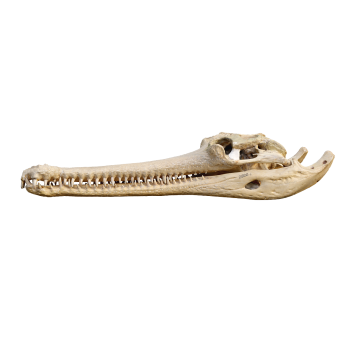
Indian fish eating crocodile skull
The fish eating crocodile, also known as the Indian crocodile, is a large reptile similar to crocodiles. Indian crocodiles are commonly found along rivers in Pakistan, India, Nepal, and Bangladesh. Male Indian crocodiles can reach a length of 5.5 meters, while female Indian crocodiles can reach a length of 4 meters. During mating season, male crocodiles use the raised part of their nose to make a peculiar sound, attracting female crocodiles to their side. After mating, female crocodiles will lay 30 to 40 crocodile eggs in the bottle shaped hole. The appearance is very similar to that of a regular crocodile. But unlike other crocodiles, the fish eating crocodile is the longest snout crocodile.

Popular Models



Random Model
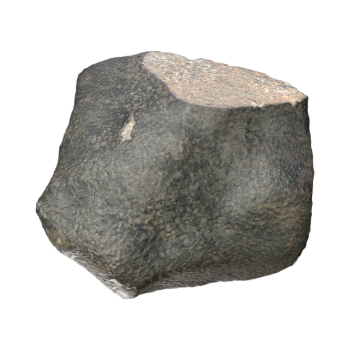
Stein meteorite
1172 View


stick insect
740 View

Adidas Gazelle sneaker
520 View


Chuancun Land Frog
1139 View

㺢㹢狓 specimen
751 View

3D model of welding machine
1053 View
